Newsletter Subscribe
Enter your email address below and subscribe to our newsletter

Enter your email address below and subscribe to our newsletter
All voices matter

A more organized week does not have to start with a major life reset or a long list of expensive products. In most homes, the biggest difference comes from a few practical habits that save time, reduce waste, and make everyday tasks feel easier. When your kitchen is easier to use, your bills are a little lower, and your routines are less chaotic, the whole week runs better. The good news is that many of the best home improvements cost very little and can be started right away. With a few smart changes, you can create a home that feels calmer, works harder for you, and helps you spend less.
One of the easiest ways to save money and stay organized is to begin each week with a short home reset. This does not mean deep cleaning the entire house. It means spending 20 to 30 minutes putting the main areas back in order so the week starts from a better place.
Focus on the spaces that affect your daily routine most: the kitchen, entryway, bathroom, and laundry area. Clear counters, throw away expired food, sort loose papers, and return everyday items to their usual spots. If shoes, bags, keys, and chargers always end up in different places, set up one basket or tray near the door to hold them.
This small reset helps prevent duplicate purchases and wasted groceries. For example, when you can clearly see what is in the fridge and pantry, you are less likely to buy an extra loaf of bread, another bottle of sauce, or snacks you already have. It also makes weekday mornings smoother because you spend less time looking for what you need.
Meal planning is one of the most practical money-saving habits for any household. It keeps grocery shopping focused, reduces last-minute takeout, and helps you use what you already have before it goes bad. The key is to keep it simple enough that you will actually do it every week.
Start by checking your fridge, freezer, and pantry before making a shopping list. Build a few meals around ingredients that need to be used first. If you have cooked rice, vegetables, and eggs, that could become a quick fried rice dinner. If you have chicken, tortillas, and lettuce, that could turn into wraps for lunch and dinner.
Choose a few flexible meals instead of planning seven complicated recipes. Pasta, soups, grain bowls, baked potatoes, and stir-fries are useful because they can be changed based on what is on hand. It also helps to prepare one or two basics in advance, such as washed salad greens, chopped vegetables, or a pot of beans. These small steps make home cooking more realistic on busy days.
Keep a short list of low-cost backup meals in the kitchen for nights when plans change. Ideas like oatmeal, quesadillas, tomato pasta, vegetable soup, or scrambled eggs on toast can save money and stop the habit of ordering food out simply because everyone feels tired.
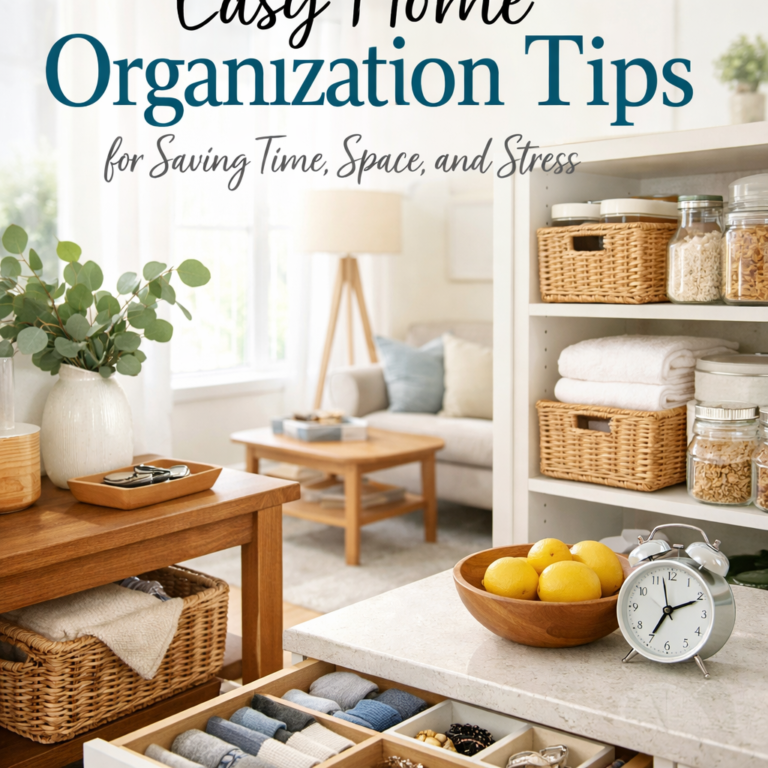
Organization works best when it supports real life. A complicated system with too many bins, labels, and rules often gets ignored after a few days. Instead, aim for simple systems that are easy to maintain and easy for everyone in the home to follow.
Give everyday items a home near where they are used. Store cleaning cloths under the sink, keep lunch containers near the food storage area, and place a donation bag in a closet for items you no longer wear. In the bathroom, use one small container for products you use daily and move less-used items out of the way. This makes morning and evening routines faster and less frustrating.
Paper clutter is another common source of stress. Set up one spot for incoming mail and school papers, then sort it once or twice a week. Recycle junk mail right away, file anything important, and add due dates to a calendar before the paper disappears into a pile.
It also helps to do a quick 10-minute tidy at the same time each day. You might choose after dinner or before bed. Put away a few items, wipe one surface, and reset the room you use most. Small daily efforts are often more effective than waiting for the mess to become overwhelming.
Saving money at home is not only about shopping less. It also comes from using your home more efficiently. A few better habits can help lower everyday utility costs without making your space uncomfortable.
Start with lighting and appliances. Turn off lights in empty rooms, unplug rarely used electronics, and run full loads in the dishwasher and washing machine. Washing clothes in cold water can also help reduce energy use, and air-drying some items can make them last longer.
In the kitchen, keep the refrigerator organized so air can circulate and food does not get forgotten. Check the seals on the fridge and freezer doors if they do not close tightly. When cooking, use lids on pots to help food heat faster, and try batch cooking so the oven or stove is used more efficiently.
Heating and cooling costs can also creep up when routines are not working well. Close curtains during the hottest part of the day in summer, open them when you want natural warmth in winter, and use draft blockers if certain rooms lose heat easily. Even these basic changes can make a noticeable difference over time.
A well-run home is not just about cleanliness and saving money. It should also make daily life feel healthier and more manageable. Simple wellness habits at home can improve the flow of your week and help you feel less rushed.
Set up one or two routines that make healthy choices easier. Fill a water bottle in the morning and keep it nearby. Place fruit where it is visible instead of hidden in a drawer. Prep a few grab-and-go snacks, such as yogurt, cut vegetables, boiled eggs, or nuts, so busy afternoons do not lead to expensive convenience foods.
Sleep routines matter too. A calmer evening often starts with a calmer space. Clear the bedroom floor, charge devices away from the bed if possible, and spend a few minutes preparing for the next day. Laying out clothes, checking the calendar, and packing lunches ahead of time can remove a lot of morning stress.
If you live with family, involve everyone in a few shared routines. A five-minute kitchen reset, putting laundry in baskets instead of on floors, or packing bags before bedtime can make the home feel more cooperative and much less chaotic.
The most effective home changes are usually not dramatic. They are small improvements repeated often enough to become normal. Instead of trying to organize every drawer in one weekend, choose one trouble spot at a time. Maybe this week you clear the pantry shelf, next week you set up a better mail station, and the week after that you simplify your laundry routine.
Before buying any organizing product, ask whether a basic container you already own could do the job. Shoe boxes, jars, baskets, and small trays often work just as well as new storage items. This saves money and helps you avoid bringing more unnecessary items into the home.
It is also useful to keep a short list of home habits that give the biggest return: check food before shopping, tidy one room daily, prep a few meals ahead, and deal with clutter in small batches. When these become regular parts of your week, the home feels easier to manage and less expensive to run.
A more organized and affordable week starts with simple choices that fit your real life. By resetting key spaces, planning meals, improving daily systems, and building healthier home habits, you can save money and reduce stress without making things complicated. Small changes done consistently often lead to the biggest results.